
Sinka standard
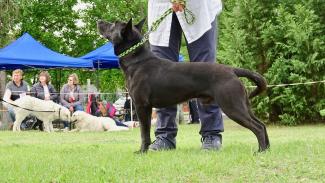
A fajta leírását (standardját) az HKE ETSZ és a HUKOSZ-MESZ (MKF-HK) archaikus pásztorkutya, pásztor típus, a sinka standardja tartalmazza, melynek legutóbbi változatát 2020. november 8-án fogadták el, és 2021. január 1-jétől hatályos. Az eredeti standard kiadási dátuma: 2020.
A fajta neve: Sinka
Származás: Magyarország
Nemzetközi elnevezés, angol név: Sinka
Besorolás: magyar pásztor- és vadászebek, Sinka. Munkavizsgára nem kötelezett.
Történeti áttekintés:
A XIX-XX. században magyarországi terelő pásztorkutyák (Kiemelten a puli, a mudi, a pumi.), és feltehetőleg különféle állófülű német juhászkutyák, alföldi pásztorok által végzett tudatos keveréséből alakult ki. Több generációs pásztorokkal végzett interjúkból kiderül, hogy a sinka az Alföld kiemelkedően jó legelőin évszázadok óta pásztorkodással foglalkozó népek és maga a pásztorkodó létmód a XIX. századtól egyre visszaszorult és a XX. század második felére elvesztette jelentőségét, népszerűségét és ismertségét. A megmaradt pásztorhagyományokat a néprajztudósok rögzítették. A sinka hasonló néven csak a legmodernebb korban jelent meg, de elődei, a populáció genetikai ősei már a századfordulón is jelen vannak és magyar félvér csoportosításban találjuk meg őket a hagyományunkban említve. Utóbbiból differenciálódással alakították ki első sorban a pusztai pásztorok ezt a munkatípust, mely idővel fajtává alakult.
Sokáig senki nem látott bele a pásztorok napi életébe, a sinka ezért egy zárt paraszti világban fejlődött és alakult. Mai korunkban, a nemzeti értékek újra felfedezése időszakában indokolt leírni a fajtát, mint egységes, de mégis kellően heterogén tulajdonságokat hordozó, illetve mára kulturális és értéket hordozó, speciálisan magyar kutyafajtát. Jól tűri a meleget, a szőre alkalmas a nagyobb fűben való mozgásra, mozgékony, kitartó, jól irányítható. Elterjedési területe Magyarország síkságai, állattartó gazdaságok, munkakutyaként foglalkoztatott fajta. Kennel tenyésztése elvétve tapasztalható. A tenyésztést a gazdálkodók végzik. A fajtát a gazdasági felhasználás igélnyeinek megfelelően fejlesztették ki és formálják mind a mai napig. Ezért a standard figyelembe veszi a változásokat és első sorban az antómiai és a wesen alkalmasságot preferálja munkakörnyezetben tesztelve. Tenyészszemlén kívánatos az állattolerancia vizsgálata. Tenyésztésében elsődleges a megfelelő termet, szőr és főként a kívánatos viselkedés.
Az elnevezés eredete: SIMA, a hortobágyi “pásztornyelven” SINKA.
Általános megjelenés
A sinka a magyarság történelmi kutyafajtája, amelyet az archaikus pásztorkodás igényei alakítottak ki és formáltak meg. Feladata vándorló, legeltető állattartásban a terelő munkában való segítségnyújtás, az állatok védelme, felvigyázása. Termetére nézve középnagy, kissé nyújtott testalkatú, erős és jól izmolt, csontozata száraz, felépítésében feszes.
Legfontosabb méretarányok
A kanok marmagassága 55 cm-től 65 cm-ig, a szukák marmagassága 45 cm-től 60 cm-ig terjed. A testhossz 10-17%-kal meghaladja a marmagasságot.
Természet (vézen-wesen, karakter)
A sinka kiegyensúlyozott, erős idegrendszerű, magabiztos természetű, abszolút elfogulatlan és (ha nem ingerlik) jóindulatú. Ezen felül figyelmes, élénk, könnyen tanítható vezethető, fáradhatatlan munkabírású, bátor, ezáltal alkalmas terelő kutyának. A sinka őrkutya és terelőkutya egyben. Bátor viselkedése miatt a pásztorok körében a nagyobb testű, vagy nehezen kezelhető állatok terelésére, őrzésére is igen kedvelt. Vaddisznó hajtóvadászatra is használják. Kitűnő őrző-védő, sport-, és
kísérőkutya. Házőrző, és jelzőkutya. Házi ebként is megállja a helyét. Viszonylag rövid szőrzete és kitűnő alkalmazkodóképessége miatt lakásban is nehézség nélkül tartható. Mozgásigénye nagy. Önálló, következetes gazdát igényel. Tartása aktív életmódot, rendszeres foglalkozást és nagyobb teret kíván meg. A sinka standardja a kutya egészségvédelmének a szempontjából olvasandó. Olyan tulajdonságok, amelyek azonosíthatóan megbetegedésről tanúskodnak, vagy megbetegedés esetét vetik fel a tenyésztésben nem kívánatosak. A fajta alapvetően heterogén. A törzskönyv nyitott. Tenyésztési Terve a HUKOSZ-Magyar Ebfajták Szövetsége által érvényesített és alkalmazott MFK Tenyésztési Szabályzatából a pásztor típusra érvényes részekkel. Jelen standard ennek a Tenyésztési Szabályzatnak az általános standardján belül értendő.
Fej
Az ék alakú fej hossza nagyjából a marmagasság 40%-a. Nem lehet durva, vagy megnyúlt. Összességében száraz, a fülek között kellően széles. A homlok elölről és oldalról nézve csak enyhén domború, a középbarázda nem, vagy csak alig látható. Az agykoponya és az arckoponya aránya 50-50%. Az agykoponya szélessége nagyjából megegyezik a hosszával. Felülről nézve a fülektől az orr felé fokozatosan keskenyedik. A ferde lefutású homlokvonal kifejezett stop nélkül folytatódik az ék alakú arcorri részben. Az állcsont és az állkapocs erőteljes. Az orrhát egyenes. Törés vagy túlzottan hangsúlyos domborulat az orrháton nem kívánatos.
Az ajkak feszesek, jól záródnak és sötét színűek.
Orr
Az orrhátnak feketének kell lennie. Váltóorr nem megengedett.
Fogazat
Egészséges és hiánytalan (42 fogból áll a fogképlet). A sinka fogazata ollós harapású, vagyis a metszőfogak ollósan záródnak, oly módon, hogy az alsó metszőfogak külső-felső harmada zárul a felső metszőfogak belső-alsó harmadához. Hiba a hátraharapás (ponty-szerű), az előreharapás (csuka-szerű), illetve a fogak közötti hézagok, valamint a ráharapás (harapófogó-szerű) is. F1 foghiány elfogadható. Az állcsont és az állkapocs legyenek jól fejlettek, hogy a fogak mélyen beágyazódhassanak.
Szem
Középnagy, mandulaformájú, kissé ferde metszésű, nem kidülledő. A szem színe lehetőleg legyen sötét. A világos, szúrós szem nem kívánatos. Laza szemhéjak a tenyésztésben nem kívánatosak.
Fül
A sinkának középnagy, magasan tűzött, felálló, előre forduló, a hegyén csúcsban elhegyesedő füle van. A két fül tengelye párhuzamos, nem lehet elálló. Hiba az előrebicsakló és a lógó fül. Mozgás közben, illetve nyugalmi állapotban a leengedett fül nem hiba.
Nyak
Erős, jól izmolt, lebernyeg nélküli. A vízszinteshez viszonyítva a testtel 45°-ban illeszkedik.
Törzs
A felsővonal a nyak illeszkedési pontjától indul, a magas maron és az egyenes háton keresztül az enyhén lejtő farig törés nélkül fut le. A hát kellően hosszú, feszes, erős és jól izmolt. Az ágyék széles, rövid, erős és jól izmolt. A far legyen hosszú és enyhén lejtős, csapott (kb. 23%-ban a
vízszinteshez) és a felsővonal megtörés nélkül megy át a faroktőbe. A felsővonal egyenes és vízszintet mutat.
Mellkas
Legyen kellően széles, az alsó része (alsómellkas) hosszú és kifejezett. A szívtájék erős. A mellkas mélysége a marmagasság 45-48%-a. A bordák kellően dongásak legyenek. A hordó forma éppúgy hiba, mint a lapos. A bordakosár a könyökre ér.
Farok
Legalább a csánkig érjen, de a hossza ne haladja meg a hátulsó lábközép felét. A farok alsó éle dúsabban szőrözött. Nyugalomban a kutya enyhe ívben hordja. Megengedett a hátvonal fölé emelkedő és arra rákunkorodó farok is. A farok lehet közepesen és magasan tűzött. Izgalomban és mozgás közben mindenképpen feljebb emeli a farkát. A mesterséges (művi) farokkorrekció tilos. Kivételt képez a munkabaleset miatt csonkolt végtag. (Orvosi igazolás szükséges.)
Végtagok
Elülső végtag
Minden oldalról egyenesek, szemből nézve párhuzamosak legyenek. A lapocka és a kar egyforma hosszú és erős izomzattal kapcsolódjon a törzshöz. A lapocka és a kar egymással ideális esetben 90°-ot, a gyakorlatban 110°-ig tartó szöget zárhat be. A könyök sem állásban, sem mozgásban nem fordulhat ki, vagy be. Az alkar, mely minden oldalról egyenesnek látszik, száraz és erősen izmolt. Az elülső lábközép hossza az alkar hosszúságának kb. 1/3-a és azzal 20-22°-os szöget zár be. Az ennél dőltebb (több, mint 22°), vagy meredekebb (kevesebb, mint 20°) lábközép csökkenti a használhatóságot, különösen a kitartást.
Hátulsó végtag
A hátulsó végtag mag alá állított, de elfogadható ha kissé hátraállított. Hátulról nézve a végtagok párhuzamosak A comb és a lábszár közel egyforma hosszú és egymással kb. 120°-os szöget zár be. A comb erős és jól izmolt. A csánkízület erős és feszes, alatta a hátulsó lábközép függőleges.
Mancs
Kerekded, jól zárt, domború. A talppárna kemény, de nem merev. A karmok erősek és preferáltan egyformák, sötét színűek. Farkasköröm és dupla farkasköröm egyaránt megengedett.
Mozgás
A sinka ügető típusú mozgással rendelkezik. A poroszkálás hiba. A végtagok hossza és egymással bezárt szöge olyan legyen, hogy mozgás közben a hátvonal ne változzon, mialatt a hátulsó végtag a testet előre tolja. Az elülső végtag szintén kellően térölelően tudjon mozogni. A hátulsó végtag túlszögeltségére irányuló hajlam csökkenti a feszességet és a kitartást, ezáltal a használati értéket. A korrekt testfelépítés és szögelések eredményezik a térnyerő,vízszintesen a talaj fölött végzett mozgást, ami a sinka fáradhatatlanságának záloga. Az előrenyújtott fej és a kissé felemelt farok is szerepet játszik az egyenletes és nyugodt ügetésben, a fül hegyétől a tarkón keresztül a farokvégig tartó, enyhén ívelt és meg nem törő felsővonal kialakításában.
Bőr
Lazán kötődik a testhez, de sehol nem redőzött. Bőrlebernyeg nem megengedett.
A szőrzet minősége
A sinka szabályos szőrzete rövid egyenes szálú (sima szőrű) ill. félhosszú egyenes szálú (félhosszú szőrű) aljszőrzettel.
Sima és félhosszú szőrzet:
A fedőszőr lehetőleg tömött, keményszálú és testhez simuló. A fejen, beleértve a fülek belső felületeit, a végtagok elülső oldala, a mancsok és lábujjak szőrzete rövid, a nyakon kissé hosszabb és dúsabb. A lábak hátoldalán, egészen a lábközépig, szintén hosszabb. A combokon pedig a szőrzet még hosszabb, ún. nadrágot formálhat.
Színezet
Minden színváltozat elfogadott. Fekete, a vörösesbarnától a barnán és a sárgán keresztül a világos ordas jegyekig. Egyszínű fekete a leggyakoribb. Kis fehér mellfolt, vagy kivilágosodott szőrzet a végtagok belső oldalán nem kívánatos, de megengedett. Minden színváltozatnál az orr fekete legyen. Maszkos változat is elfogadott szintén fekete orral.
Méret és testsúly
Kanok: Marmagasság: 55 cm-től 65 cm-ig, ideális: 63-64 cm. Testsúly: 20 kg-tól 35 kg-ig.
Szukák: Marmagasság: 45 cm-től 60 cm-ig, ideális: 58-59 cm. Testsúly: 18 kg-tól 30 kg-ig.
Here
Kettő, szemmel láthatóan jól fejlett, a herezacskóban elhelyezkedő herével kell rendelkeznie a kannak.
Hibák
Az eddig leírtakhoz képest minden eltérés hibának minősül. Ezen hibák nagyságát az eltérés mértéke alapján kell értékelni.
Súlyos hibák
Azok az eddig leírtaktól való eltérések, melyek a kutya használhatóságát csökkentik.
Fülhibák: oldalt vagy alacsonyan tűzött fülek, előrebicsakló, befelé dőlő és laza fül. Jelentős pigmenthiány. Az általános feszesség nagymérvű hiánya.
Foghibák
Minden eltérés a szabályos ollós harapástól, foghiba és a nem kizáró foghiány.
Kizáró hibák
A. vézen gyenge, félős és ideggyenge kutyák,
B. bizonyítottan súlyos csípőízületi diszplázia,
C. féloldali és kétoldali rejtett heréjűség, az eltérő méretű, illetve kicsi, fejletlen here,
D. korrigált fül és farok,
E. eltorzulások,
F. foghibák, foghiányok: 1 db P3 és egy további fog, vagy
- 1 db szemfog, vagy
- 1 db P4, vagy
- 1 db M1, illetve M2, vagy
- összesen három, vagy több hiányzó fog.
G. állkapocs fejlettségi hiba:
- 2 mm-nél nagyobb hátraharapás,
- előreharapás,
- az összes metszőfog ráharapása,
H. magassági mérettől minimum 5 cm-nél nagyobb, jelentős eltérés,
I. albinizmus,
J. fehér és hosszú, vagy félhosszú szőrzet, különösen, ha a szem és a karmok feketék,
K. félhosszúszőrű változat aljszőrzet nélkül (hosszú, puha fedőszőr, az aljszőrzet hiányzik, általában a hát középvonalán szőrválasztékot képez, zászlók a fülön, a végtagokon és zászlós farok).
(A dokumentum négyoldalas.)
International version
issuer: HUKOSZ-Hungarian Dog Breed Association; all rights reserved
original language: Hungarian
All interpretations must be done under the determinatrion of the Hungarian version.
translated by: HUKOSZ-Hungarian Dog Breed Association (HUKOSZ-MESZ)
date of issue of the original version: 2021.
date of issue of the English version: 2024.
Any reuse, adapt or, quote in general or partially only with the premission of the issuer!
SINKA STANDARD
The description (standard) of the breed is contained in the standard of the archaic shepherd dog, shepherd type of HKE ETSZ and HUKOSZ-MESZ (MKF-HK), the Sinka, the latest version of which was adopted on November 8, 2020 and effective from January 1, 2021. The original standard was released in 2020.
Name of the variety: Sinka
Origin: Hungary
International name: Sinka
Classification: Hungarian shepherd and hunting dogs, Sinka.
For breeding it is not required to take a specialised work exam.
History overview:
In the 19-20. centuries. It was formed in todays form in the 20 century by the conscious mixing of Hungarian herding dogs (especially puli, mudi, pumi.) and presumably various standing-eared German shepherd dogs and lowland shepherds. Interviews with several generations of pastoralists reveal that the Sinka peoples who have been pastoralizing in the exceptionally good pastures of the Great Plain for centuries and the pastoralist way of life itself declined from the nineteenth century onwards and lost its importance, popularity and notoriety by the second half of the twentieth century. The remaining pastoral traditions were recorded by ethnographers. The name Sinka similarly appeared only in the most modern age, but its predecessors, the genetic ancestors of the population, are already present at the turn of the century and we can find them in Hungarian half-blood groupings mentioned in our tradition. From the latter, this type of work was developed primarily by the shepherds of the wilderness by differentiation, which over time evolved into a breed. For a long time, no one could see into the daily life of shepherds, so the Sinka developed and formed in a closed peasant world. In today's era, in the period of rediscovery of national values, it is appropriate to describe the breed as a unique, yet sufficiently heterogeneous dog breed with uniform but still sufficiently heterogeneous characteristics, and by now a specially Hungarian dog breed carrying cultural value. It tolerates heat well, its fur is suitable for movement in larger grass, it is agile, persistent, well controllable. Its distribution area Hungary plains, livestock farms, breed employed as a worker. Kennel breeding is rare. Breeding is carried out by farmers. The breed was developed and shaped according to the promises of economic use to this day. Therefore, the standard takes into account changes and prefers anthomic and wesen suitability when tested in a work environment. At a breeding inspection, it is desirable to test animal tolerance. In breeding, proper stature, fur and especially desirable behavior are paramount. The origin of the name is SIMA (Eng. FLAT), in the "shepherd's language" of Hortobágy SINKA.
General appearance
The Sinka is the historical dog breed of the Hungarians, which was formed and shaped by the needs of archaic shepherding. Its task is to assist in herding work in migratory and pastoralizing livestock, to protect and supervise animals. In stature, it is medium-large, slightly elongated, strong and well-muscled, its bones are dry and its structure is tight.
Key scales
The height at the withers of boars is from 55 cm to 65 cm, and the height at withers of is from 45 cm to 60 cm. Body length exceeds height at withers by 10-17%.
Nature (wesen, character)
The sinka is balanced, has a strong nervous system, a confident nature, absolutely unbiased and (if not irritable) good-natured. In addition, he is attentive, lively, easy to train, driveable, tireless at work, courageous, and therefore suitable as a herding dog. The Sinka is a guard dog and a herding dog at the same time. Due to its brave behaviour, it is also very popular among shepherds for herding and guarding larger or difficult to handle animals. It is also used for wild boar manhunting. It is an excellent guard, sport and companion dog. He is a watchdog and signal dog. It can also stand its ground as a domestic dog. Due to its relatively short coat and excellent adaptability, it can be kept in an apartment without difficulty. It requires a lot of exercise. It requires an independent, consistent host. Keeping it requires an active lifestyle, regular occupation and more space.
The standard of the Sinka should be read from the point of view of the health protection of the dog. Traits which are identifiable as indicating disease or suggesting disease in breeding are undesirable. The breed is fundamentally heterogeneous. The pedigree is open. Its breeding plan with parts of the MFK Breeding Regulations validated and applied by the HUKOSZ-Hungarian Dog Breeds Association valid for the shepherd type. This Standard is understood within the general standard of this Breeding Plan.
Head
The length of the wedge-shaped head is about 40% of the height at the withers. It should not be rough or elongated. Overall, dry, sufficiently wide between the ears. The forehead is only slightly convex when viewed from the front and sides, the mid-furrow is not visible or barely visible. The ratio of the cerebral skull to the facial skull is 50-50%. The width of the brain skull is approximately equal to its length. When viewed from above, it gradually narrows from the ears to the nose. The oblique forehead continues without a pronounced stop in the wedge-shaped facial nasal part. The jawbone and jaw are powerful. The back of the nose is straight. A fracture or excessively pronounced bulge on the back of the nose is undesirable. The lips are taut, close well and have a dark color.
Nose
The back of the nose should be black. Pinkish shift noses, so called snow noses are not allowed.
Teeth
Healthy and complete (the tooth formula consists of 42 teeth). The teeth of the sink are scissor-bitten, that is, the incisors close scissor-like in such a way that the outer-upper third of the lower incisors closes to the inner-lower third of the upper incisors. Backbiting (carp-like), forward biting (pike-like), gaps between teeth and biting on (pincer-like) are also defects. F1 tooth deficiency is acceptable. The jawbone and jaw must be well developed so that the teeth can be deeply embedded.
Eye
Medium large, almond-shaped, slightly obliquely incised, not bulging. The colour of the eyes should preferably be dark. Bright, prickly eyes are undesirable. Loose eyelids in breeding are undesirable.
Ear
The Sinka has medium-large, high-pinned, erect, forward-facing ears that are pointed at the tip. The axes of the two ears are parallel, they should not be protruding.
The fault is the protruding and hanging ears. When moving or at rest, a lowered ear is not a defect.
Neck
Strong, well muscled, without lobes. Relative to the horizontal, it fits 45° with the body.
Trunk
The upper line starts from the point of attachment of the neck, runs down the high withers and straight back to the slightly sloping rump without breaking. The back is sufficiently long, taut, strong and well muscled. The groin is wide, short, strong and well muscled. The rump should be long and slightly sloping, sloping (about 23% to horizontal) and the topline should pass into the base of the tail without breaking. The topline is straight and shows water level.
Chest
It should be sufficiently wide, its lower part (lower chest) should be long and pronounced. The heart region is strong. The depth of the chest should be 45-48% of the height at the withers. The ribs should be sufficiently bumpy. The barrel shape is just as much a flaw as the flat one. The rib cage reaches the elbow.
Tail
It should reach at least as far as the hocks, but should not exceed half the hind metatarsal. The lower edge of the tail is more richly haired. At rest, the dog carries it in a slight arc. A tail rising to the head of the dorsal line and curling over it is also permitted. The tail can be medium and high-pinned. In excitement and when moving, he will definitely raise his higher. Artificial tail correction is prohibited. The exception is a limb mutilated due to an accident at work. (Medical certificate
required.)
Limbs-The locomotor system
Front limb
They should be straight on all sides and parallel when viewed from the front. The shoulder blades and arms should be connected to the torso with equally long and strong musculature. The shoulder blade and arm should ideally be at an angle of 90° to each other, in practice up to 110°. The elbow must not turn in or out either when standing or moving. The forearm, which looks straight from all sides, is dry and heavily muscled. The length of the foreleg is about 1/3 of the length of the forearm and is at an angle of 20-22°. A more inclined (more than 22°) or steeper (less than 20°) metatarsal reduces usability, especially endurance.
Hind limb
The hind limb is set under the core, but it is acceptable if slightly set back. When viewed from behind, the limbs are parallel The thighs and legs are approximately the same length and at an angle of about 120° to each other. The thigh is strong and well muscled. The hock joint is strong and tight, underneath the hind metatarsal is vertical.
Paw
It is rounded, well closed, convex. The sole cushion is hard, but not rigid. The claws are strong and preferably alike, dark in color. Both wolf claws and double wolf claws are allowed.
Movement
The Sinka has a trotting type of movement. Amble or pace is a mistake. The length and angle of the limbs must be such that the dorsal line is not altered when moving, while the hindlimb pushes the body forward. The front limb should also be able to move sufficiently deflecturingly. The tendency to over-angle the hind limb reduces tightness and endurance, hence the value of use. The correct body structure and angles result in the gaining ground movement horizontally above the ground, which is the key to the tirelessness of the sinka. The forward head and slightly raised tail also play a role in an even and calm trot, creating a slightly curved and unbroken upper line from the tip of the ear through the nape to the tip of the tail.
Skin
It is loosely attached to the body, but nowhere folded. Skin lobes are not allowed.
Coat quality
The regular coat of the Sinka is short, straight (smooth-haired) and semi-long, straight-haired (semi-long-haired) undercoat.
Smooth and semi-long coat:
The coat should preferably be dense, hard and fitted to the body. On the head, including the inner surfaces of the ears, the front side of the limbs, the fur on the paws and toes is short, on the neck it is slightly longer and more lush. On the back of the legs, up to the metatarsal, it is also longer. On the thighs, the hair can form even longer, so-called trousers.
Colour/Hue
All color variations are accepted. Black, from reddish brown through brown and yellow to light ordain notes. Solid color black is the most common. A small white breast patch or lightened fur on the inner side of the limbs is undesirable, but allowed. In all color variations, the nose should be black. A masked version is also accepted, also with a black nose.
Size and Weight
Stud/Male: Height at withers: from 55 cm to 65 cm, ideal: 63-64 cm. Body weight: from 20 kg to 35 kg.
Dam/Female: Height at withers: from 45 cm to 60 cm, ideal: 58-59 cm. Body weight: from 18 kg to 30 kg.
Testicle
The boar must have two visibly well-developed testicles located in the scrotum.
Untolerated deviances
Any deviation from what has been described so far is considered an error. The magnitude of these errors shall be assessed on the basis of the degree of discrepancy.
Serious deviances
Deviations from those described so far that reduce the usability of the dog.
Ear defects: ears pinned to the sides or low, ears that stick forward, tilt inwards and are loose.
Significant pigment deficiency.
Severe lack of general tightness.
Tooth defects
All deviations from a regular scissor bite, tooth defect and non-exclusive tooth loss.
Disqualifying deviances
A. wesen weak, fearful and nervous dogs,
B. evidence of severe hip dysplasia,
C. unilateral and bilateral concealed testicles, testicles of different sizes or small, underdeveloped,
D. corrected, cropped ears and tail,
E. distortions,
F. tooth defects, missing teeth: 1 P3 and one additional tooth, or
- 1 canine, or
- 1 P4, or
- 1 M1 or M2, or
- a total of three or more missing teeth.
G. jaw development defect:
- backbite greater than 2 mm,
- bite forward,
- biting all incisors,
H. significant deviation from height size of at least 5 cm,
I. albinism,
J. white and long or semi-long fur, especially if the eyes and claws are black,
K. semi-longhair variety without undercoat (long, soft covering coat, undercoat absent, usually forms an assortment of hair on the midline of the back, flagellates on the ears, limbs and flagellated tail).
(The document in English is four pages long.)
Keresés
Ismeretterjesztés
Pomázi Ágoston: A vadászat és vadászkinológia alakulása a II. világháborút követően, napjainkig
Pomázi Ágoston: A vadászkutyák kialakulása, használata
Dugonics András: Magyar példa beszédek és jeles mondások - Eb kutya
Kutya sperma fagyasztása és a mélyhűtött termékenyítő anyag felhasználása
Nemzetünk kincsei, a Hungarikumok. Beszélgetés (nem csak) a komondor és kuvasz mai helyzetéről
Partnereink, támogatóink
Állatorvostudományi Egyetem - Állatvédelmi Kódex

Állatorvostudományi Egyetem

Magyar Turisztikai Szövetség

Magyar Szabadidősport Szövetség

Szerencsejáték Zrt.

NEA BGA

Minden jog fenntartva (C) 2020-2024. magyarkutyafajtak.hu